Capital
Yerevan
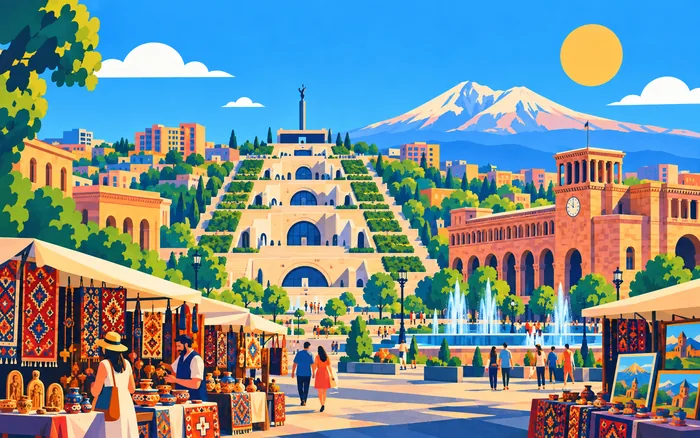
Pink-stone boulevards, Republic Square, the Cascade steps and a café culture that runs late into the night.
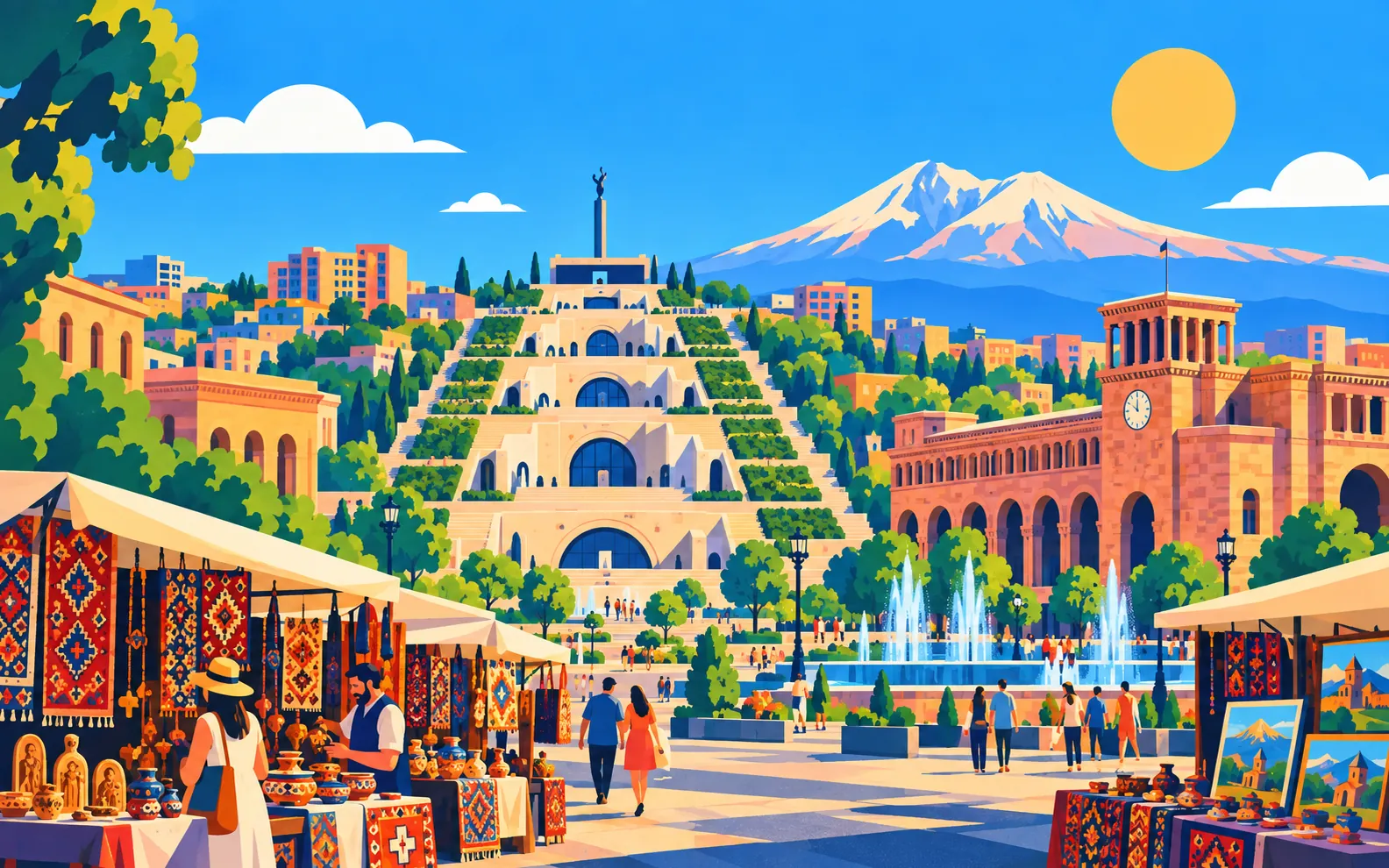
The land of ancient monasteries, mountain roads and apricots — with a 6,000-year-old wine tradition. Take it slowly; you will see more.
Armenia is small enough to cross in a day but deep enough to fill a lifetime. These six stops give a first-time visitor the country's essentials: the capital, a pagan temple, rock-cut monasteries, a mountain lake, and the view of Mount Ararat.
Pink-stone boulevards, Republic Square, the Cascade steps and a café culture that runs late into the night.
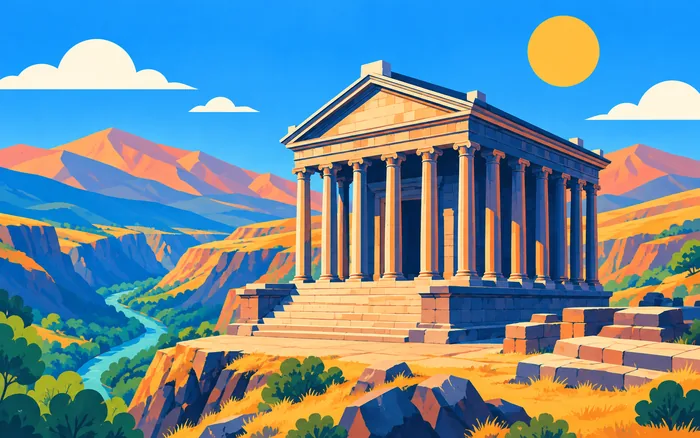
A 1st-century Greco-Roman temple — the only standing colonnaded temple of its kind in the region.
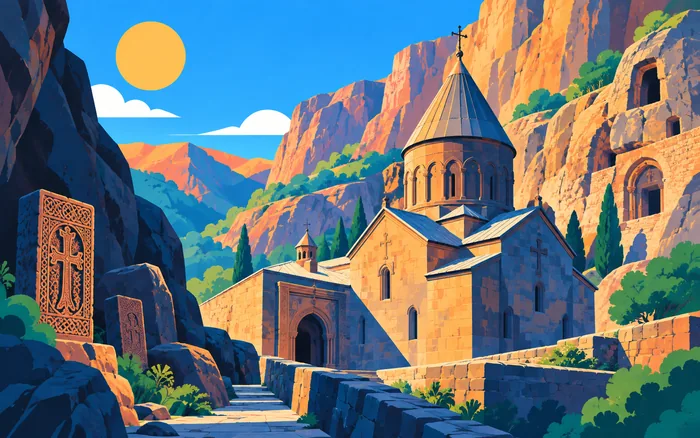
A medieval monastery partly carved straight out of the mountain, with chapels that sing with natural acoustics.
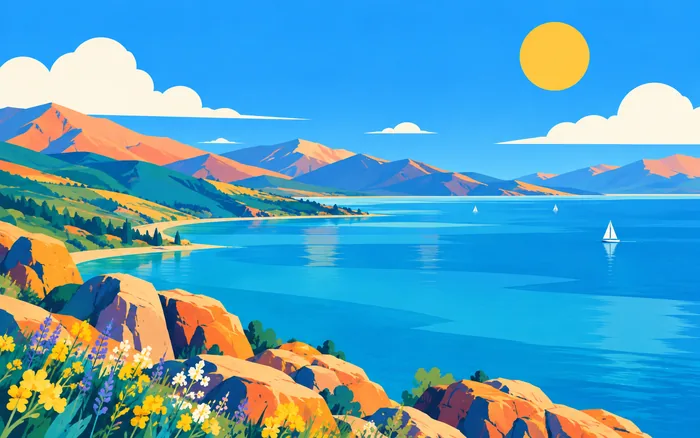
A vast high-altitude lake at about 1,900 m, with the Sevanavank monastery on its peninsula and beaches in summer.
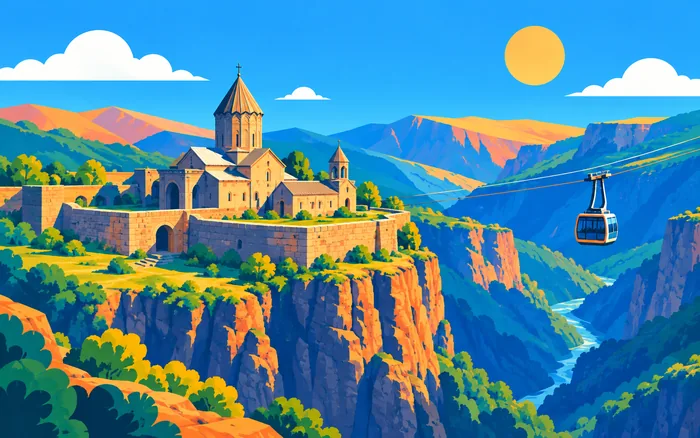
A 9th-century monastery perched over the Vorotan gorge, reached by the record-setting Wings of Tatev cableway.
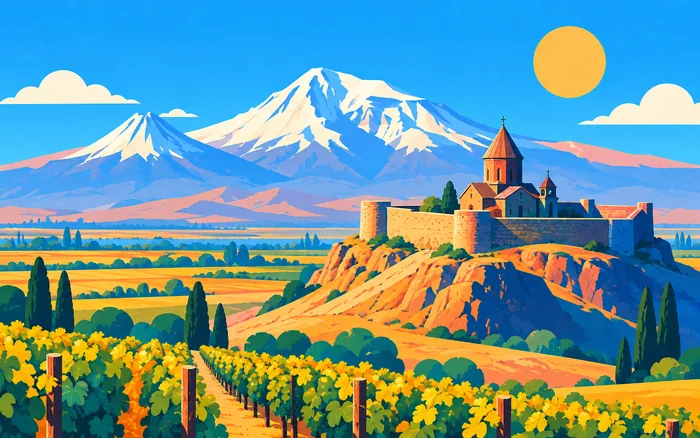
The classic postcard: a hilltop monastery framed by Mount Ararat, and the pit where St Gregory the Illuminator was imprisoned.
Armenia adopted Christianity as a state religion in the early 4th century. Its monasteries, khachkars (carved cross-stones) and cathedrals are among the oldest in the world.
Most of the country sits above 1,000 m. Hike in Dilijan's forests, swim in Lake Sevan, or ride the cable car over the Vorotan gorge.
Lavash, khorovats, apricots, and wine from the world's oldest known winery — shared with people who will insist you stay for one more toast.
From the capital to the far south, these are the places that define a first trip. Most are within two to four hours' drive of Yerevan.
Armenia's capital and largest city is built of rose-coloured tuff stone. Start at Republic Square, climb the Cascade Complex for views of Mount Ararat, browse the weekend Vernissage craft market, and visit the Cafesjian Center for the Arts.
A 1st-century AD Greco-Roman temple with Ionic columns, standing on a promontory above the Azat river gorge. It is the only surviving Greco-Roman peristyle temple in Armenia and the wider region — and a striking pagan survivor in a Christian land.
Medieval monastery in the Upper Azat Valley, with chapels hewn directly into the cliff. Its name means "spear" — the monastery once held the lance said to have pierced Christ. Listed by UNESCO for its exceptional rock-cut architecture.
One of the largest high-altitude freshwater lakes in the world, about 1,900 m above sea level. Visit the 9th-century Sevanavank monastery on the peninsula, try grilled Sevan trout, and swim from the beaches in July and August.
A 9th-century monastery and one-time medieval university on the rim of the Vorotan gorge. Reach it on the Wings of Tatev cableway, 5.75 km long — recognised by Guinness World Records in 2010 as the longest non-stop double-track cable car in the world.
A monastery close to the Turkish border with Armenia's most famous view: Mount Ararat rising behind its walls. Tradition holds that St Gregory the Illuminator was imprisoned here in a pit for 13 years before converting King Tiridates III to Christianity.
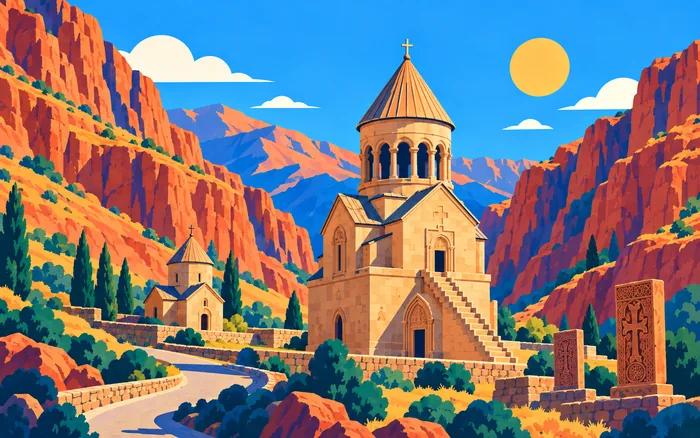
A 13th-century monastery set at the end of a narrow gorge of brick-red cliffs. The two-storey Surb Astvatsatsin church, with its narrow external staircase, is one of the finest works of medieval Armenian architecture.
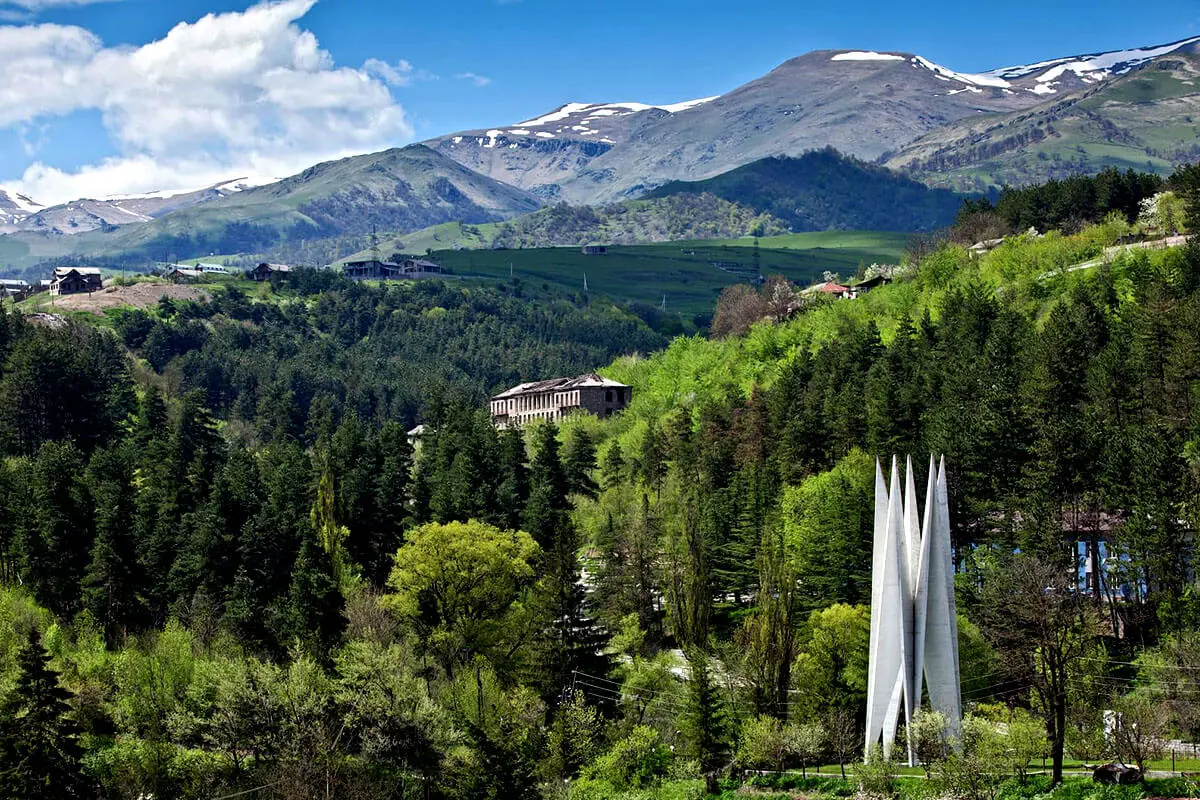
A forested spa town nicknamed the "Armenian Switzerland", surrounded by Dilijan National Park. Walk the restored Sharambeyan Street of craft workshops, then hike to the Haghartsin and Goshavank monasteries hidden in the woods..
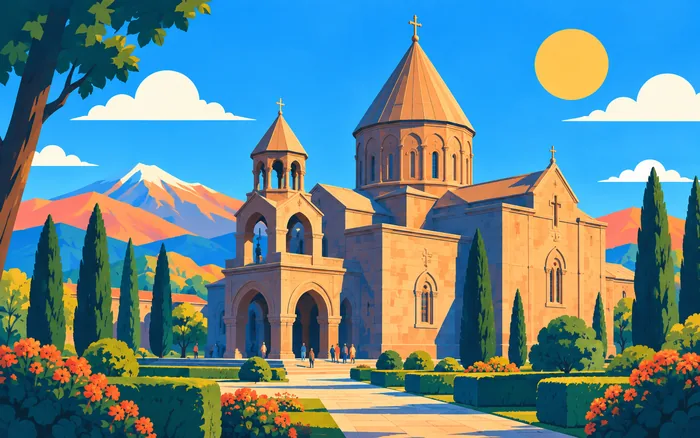
Vagharshapat, better known as Etchmiadzin, is the spiritual centre of the Armenian Apostolic Church. Its cathedral, founded in the early 4th century, is considered one of the oldest cathedrals in the world and is a UNESCO World Heritage Site.
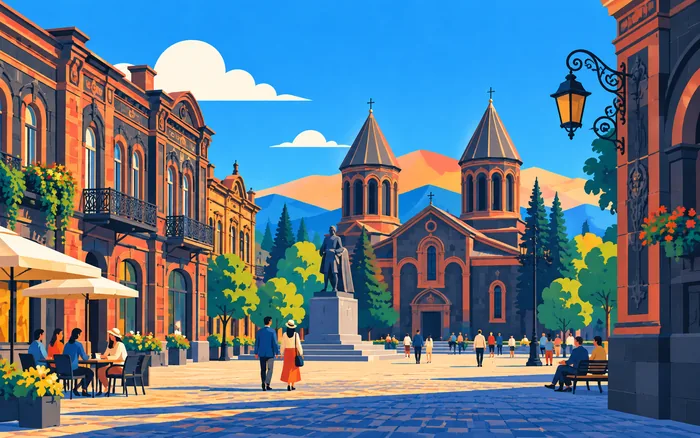
Armenia's second-largest city and its traditional capital of crafts and humour. The Kumayri historic district preserves 19th-century black and orange tuff houses; rebuilt after the 1988 earthquake, the city is today known for its galleries and bakeries.
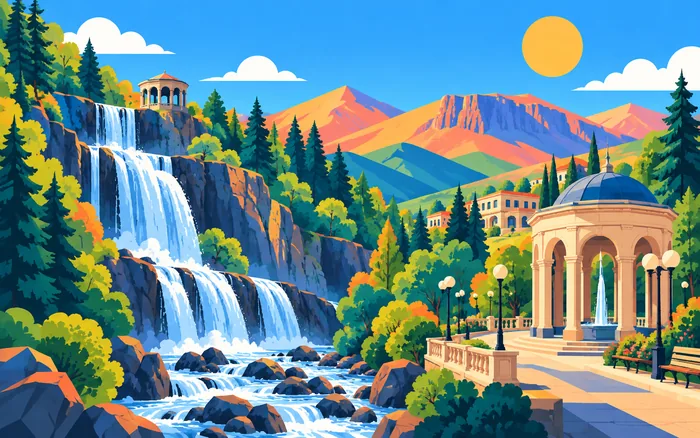
A mountain spa town famous for its hot mineral springs and bottled mineral water. Drink from the gallery of warm fountains, walk to the 70-metre Jermuk waterfall, and ride the ski lift for views over the Arpa gorge.
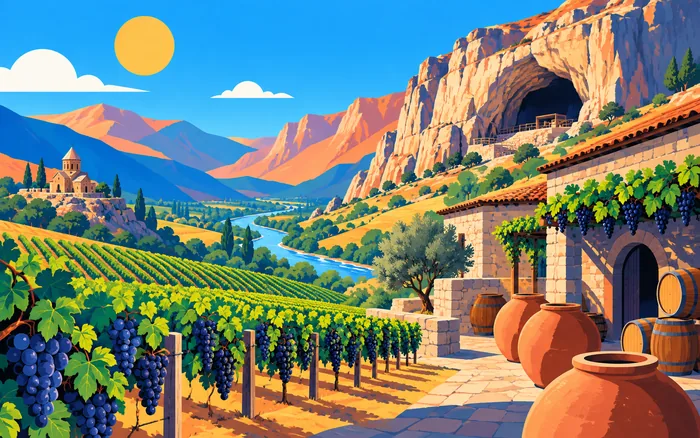
The heart of Armenian wine country. Nearby, the Areni-1 cave holds the world's oldest known winery — a wine press and fermentation jars dating to roughly 4100 BC. Taste the local Areni Noir grape at the village wineries.
Armenia is easy to travel: safe, affordable and welcoming. Here is what you need to know before you go.
Late spring (May–June) and autumn (September–October) are ideal: mild weather, clear skies and the best conditions for sightseeing and hiking.
The main gateway is Zvartnots International Airport (EVN), 12 km (7.5 mi) west of central Yerevan. Taxis and a shuttle bus connect the airport with the city in about 20–30 minutes.
Overland entry is also possible from Georgia by train, bus or marshrutka.
Armenia is very open to tourists. Citizens of the United States, EU/Schengen countries and many other nations can enter visa-free for extended tourist stays; others can obtain an e-visa online.
Rules and day-limits change — verify your nationality's requirements at the Ministry of Foreign Affairs (mfa.am/en/visa) before you travel.
The currency is the Armenian dram (AMD, ֏). Cards are widely accepted in Yerevan; carry cash for markets, marshrutkas and villages. ATMs are everywhere in cities.
Exchange rates change constantly — check the Central Bank of Armenia (cba.am) or xe.com for today's rate.
Armenian, written in its own unique 39-letter alphabet created by Mesrop Mashtots around 405 AD. Russian is widely understood, and English is common among younger people and in tourism.
Armenia is generally very safe for tourists, with low crime and a strong culture of hospitality. Use normal precautions in the city and drive carefully on mountain roads.
Avoid the border areas with Azerbaijan and check your government's current travel advisory before your trip.
This is a simple, free guide for first-time visitors to Armenia. It is not a booking site and it sells nothing — it just collects the places, facts and tips we wish we had known before our first trip, on one page you can read on your phone.
Content is checked against official and reference sources, but prices, visa rules and exchange rates change: always confirm the details that matter for your journey.
Spotted a mistake or have a tip to share? Send us an email — there is no contact form on this site, just a plain mail link.

Pick a season, pack good shoes, and let Armenia set the pace.
Browse destinations